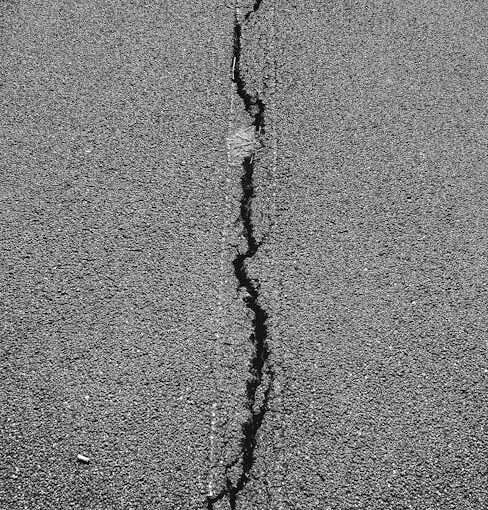
Short answer: asphalt usually fails because water gets in, the base weakens, and traffic keeps loading the pavement before it can recover. Sun, heat, freeze-thaw cycles, and poor installation speed up the damage.
If you want to know what actually destroys asphalt, don’t look only at the surface. The real damage usually starts underneath it.
The 5 biggest things that destroy asphalt
1) Water infiltration
Water is the main enemy. When cracks let moisture reach the base, the foundation softens, shifts, and loses support. That leads to more cracking, potholes, and edge failure.
2) Poor drainage
Standing water is a warning sign. If water sits on the surface or drains slowly, the pavement takes longer to dry, the binder breaks down faster, and freeze-thaw damage gets worse.
3) Freeze-thaw cycles
In colder climates, trapped water expands when it freezes. That pushes cracks wider and turns small defects into bigger structural problems.
4) UV oxidation and heat
Sunlight dries out and oxidizes the asphalt binder over time. The surface gets brittle, then cracks easier under traffic and temperature swings.
5) Heavy traffic and weak base support
Asphalt can handle a lot, but only if the base is built right. Repeated heavy loads on a thin or poorly compacted base lead to rutting, alligator cracking, and premature failure.
What usually shows up first
- Hairline cracks
- Fading and dry-looking surface
- Small alligator patterns
- Pooling water after rain
- Soft spots or sinking near edges
Once those signs show up, the goal is to stop water and support loss before the damage spreads.
What does not usually ruin asphalt by itself
- Normal vehicle traffic on a properly built surface
- Routine summer heat
- Age alone, if the pavement is maintained
Most pavement does not fail from one dramatic event. It fails because multiple small problems stack up.
How to prevent asphalt from breaking down
- Seal cracks early
- Fix drainage problems fast
- Sealcoat on schedule
- Patch weak areas before they spread
- Keep heavy loads off damaged sections when possible
- Inspect after winter and after major storms
Repair vs. replacement
If damage is mostly surface-level, repair may be enough. If the cracking is widespread, the base is failing, or potholes keep returning, replacement is usually the smarter long-term move.
If you want the deeper decision tree, see our guide on when asphalt needs repair vs. replacement.
Bottom line
What actually destroys asphalt? Usually it’s a mix of water, base failure, freeze-thaw, oxidation, and repeated load. Stop the water, protect the surface, and fix the structure before the damage compounds.
For more maintenance context, browse our asphalt category or read the latest maintenance post on the site.